

Garage Floor Coating vs Tiles vs Mats: Complete Garage Flooring Options Comparison Guide (2026)
When it comes to garage flooring options comparison in 2026, you have three main paths: a professional concrete coating, interlocking tiles, or roll-out mats. Each one works differently, costs differently, and performs differently over time. For most homeowners in Northwest Georgia and North Atlanta, a professionally installed polyaspartic garage floor coating wins on every long-term measure, but tiles and mats have their place too. This guide gives you a straight comparison so you can make the right call for your space and budget.
Quick Comparisonat a Glance
Polyaspartic Coating | Interlocking Tiles | Roll-Out Mats | |
Durability | 15–20 years | 5–15 years depending on quality | 2–5 years |
Install Time | 1 day (professional) | Few hours (DIY) | Under 1 hour (DIY) |
Concrete Protection | Yes — bonds to slab | No — sits on top | No — sits on top |
Moisture Resistance | Sealed, no trapping | Traps moisture underneath | Traps moisture underneath |
UV Stability | Yes — won’t yellow | Varies by product | Varies by product |
Maintenance | Sweep and mop | Clean tiles and underneath | Lift and clean underneath |
Warranty | Limited Lifetime Warranty (Penntek) | 3–10 years (product only) | None to minimal |
Best For | Permanent upgrade | Renters, quick changes | Temporary or spot use |
Polyaspartic and Polyurea Floor Coatings
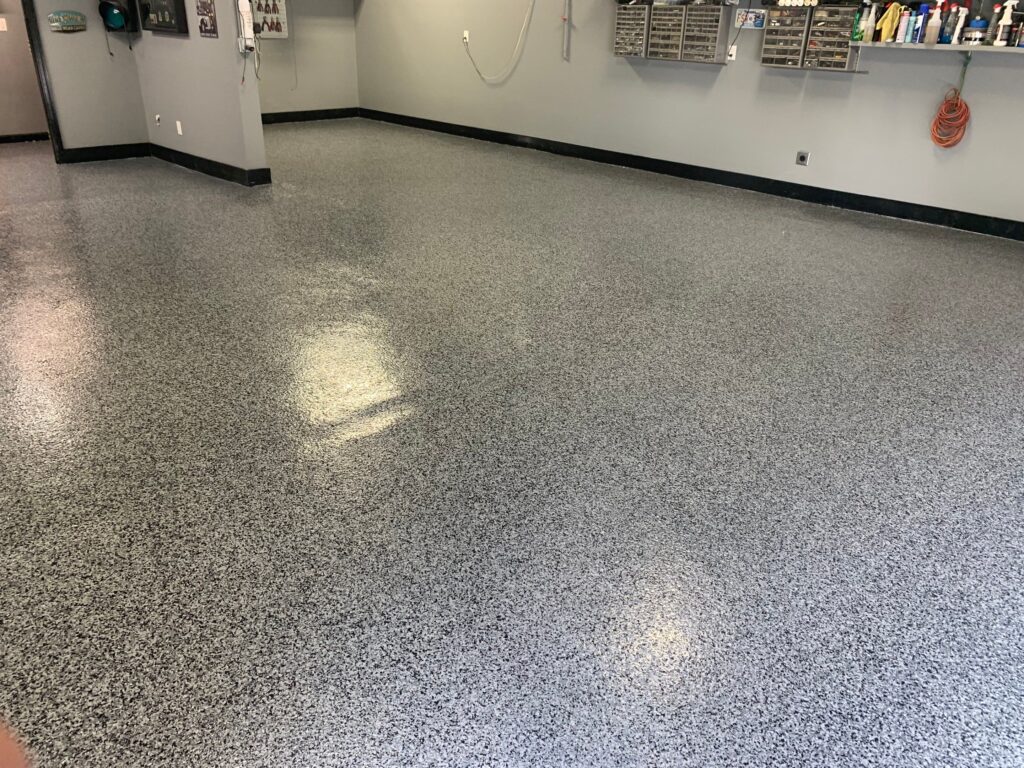
A professional Penntek coating system is the only option of the three that actually bonds to your concrete slab. The polyurea base coat penetrates the mechanically prepared surface and locks in at a molecular level. The polyaspartic topcoat seals everything, creating a seamless, non-porous surface that resists oil, chemicals, UV exposure, scratches, and hot tire pickup.
What you get with a professional coating:
- A seamless surface with no seams, gaps, or edges for debris to collect in
- UV-stable finish that won’t yellow or fade from Georgia sunlight
- Resistance to oil, gasoline, antifreeze, road salt, and cleaning chemicals
- Flexibility that handles Georgia’s temperature swings without cracking
- One-day installation with vehicles back in 24 hours
- Finish garage flooring options comparison including full flake broadcast, metallic, and solid color systems
- Limited Lifetime Warranty on residential installations
The upfront cost is higher than tiles or mats. That’s the honest tradeoff. But a coating doesn’t need to be replaced every few years, doesn’t trap moisture under it, and adds real value to your home. Over a 10-year window, a coating typically costs less per year than repeatedly replacing cheaper options.
Interlocking Garage Tiles
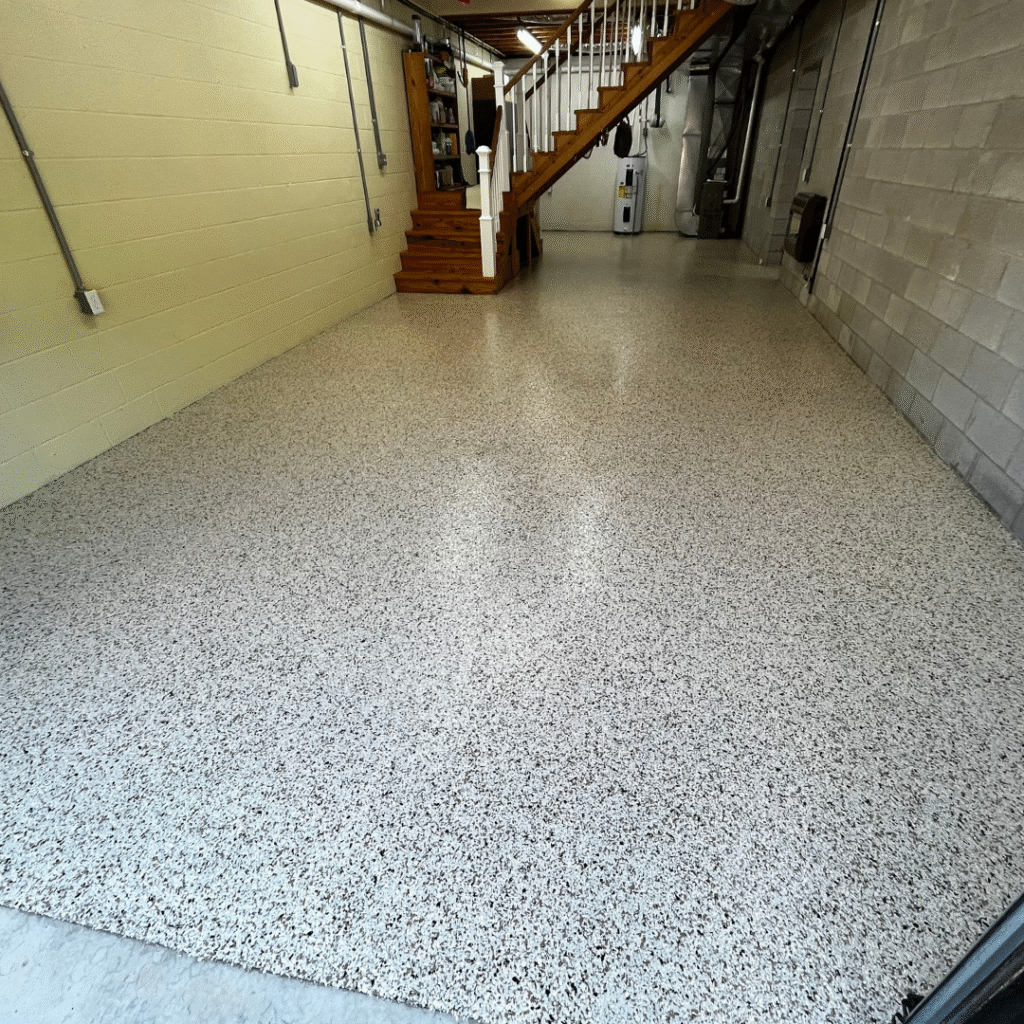
Interlocking PVC or polypropylene tiles are popular because they require zero concrete preparation, install in a few hours, and can be picked up and moved if you rent or want to change the layout later. They come in a range of colors and patterns, snap together without adhesive, and individual damaged tiles can be swapped out without redoing the whole floor.
Where tiles work well:
- Renters who can’t make permanent changes to the property
- Dedicated workshop or gym zones where cushioning or drainage matters
- Homeowners who want a fast visual upgrade with a very limited budget
- Situations where the concrete is in poor enough shape that coating prep would be extensive
Where tiles fall short, especially in Georgia:
Tiles sit on top of your concrete rather than bonding to it. That means moisture vapor rising through the slab from Georgia’s humid soil gets trapped underneath, accelerating concrete damage instead of protecting it. In warmer months, Northwest Georgia garages can get genuinely hot. Hollow-core polypropylene tiles in particular, are prone to warping, shifting, and popping apart under sustained heat and the weight of vehicles. Solid PVC tiles hold up better, but neither type seals or bonds to your slab.
Seams between tiles collect dirt, oil, and grime. Cleaning underneath requires lifting sections regularly. And unlike a coating, tiles do nothing to seal or preserve your concrete slab itself.
Tile warranties typically cover the product only, not installation or labor, and most max out at 10 years on premium products.
Garage Floor Mats and Rolls
Roll-out vinyl or rubber mats are the easiest and most budget-friendly option. You unroll them, trim to fit, and you’re done in under an hour. No tools, no prep, no adhesive. They protect against surface stains and give the floor a finished look without any real investment of time or money.
Where mats make sense:
- True temporary situations such as staging a home for sale or protecting a floor for a short-term project
- Renters who need a quick fix with zero commitment
- Spot protection under a workbench or in a specific zone
The real limitations:
Mats do not protect your concrete. They hide it. Moisture trapped underneath a mat in Georgia’s humidity can cause mold, mildew, and accelerated concrete spalling over time. In the summer heat that Northwest Georgia garages experience, mats curl at the edges, bunch under turning tires, and can become a slip hazard. Thinner mats shift every time you park and require constant repositioning.
A mat is a short-term cover-up, not a long-term floor solution. Once you lift it after a year or two in Georgia’s climate, the concrete underneath is often in worse shape than when you started.
How Georgia's Climate Changes the Decision
This is where the garage flooring options comparison shifts most clearly for homeowners in Rome, Cartersville, Calhoun, Dalton, and the surrounding Northwest Georgia and North Atlanta area.
Georgia’s combination of summer heat, high humidity, and UV exposure creates conditions that accelerate the failure of coverings that sit on top of concrete rather than bonding to it:
- Heat warps hollow-core polypropylene tiles and causes mats to curl and shift
- Humidity gets trapped under tiles and mats, wetting the concrete from above, while moisture vapor also pushes up from below
- UV exposure through open garage doors fades and degrades products not rated for sustained sun
- Temperature swings between seasons stress any material that sits loosely on concrete
Polyaspartic coatings were designed to handle all of these conditions. They cure quickly enough to avoid humidity interference during installation, remain flexible through temperature swings without cracking, resist UV without yellowing, and seal the slab so moisture can’t damage it from above or cause problems from below when properly installed with moisture testing.
Which Garage Flooring Options Comparison Is Right for You?
Choose a professional polyaspartic coating if you own your home, want a floor that lasts 15 to 20 years, and value a seamless, clean finish that protects your concrete investment. This is the right call for anyone planning to stay in their home long-term or who wants to increase property value.
Consider interlocking tiles if you’re renting, need a temporary solution, or want a specific zone, such as a home gym or workshop area with cushioning or drainage. Go with solid PVC over hollow polypropylene for durability, and plan to clean underneath regularly.
Use mats only if you need a genuinely short-term fix, are staging a home for sale, or need spot protection in a specific area. Don’t treat a mat as a permanent flooring upgrade.
A professional coating is the only option that protects your concrete rather than just covering it. In Georgia’s heat and humidity, that distinction decides whether your slab is in better or worse shape five years from now.
Frequently Asked Questions
Can I put tiles or mats over a coated floor?
You can, but there’s no reason to. A properly installed polyaspartic coating is already slip-resistant and easy to clean. Adding layers over a coated floor just creates seams and surfaces that trap dirt.
Do tiles or mats void a concrete coating warranty?
Tiles or mats placed over bare concrete don’t affect a coating warranty since you don’t have one yet. Installing tiles over a previously coated floor can trap moisture and damage the coating over time.
How long do interlocking tiles last in a hot Georgia garage?
Premium solid-core PVC tiles typically hold up 8 to 15 years with proper care. Lower-grade hollow-core polypropylene tiles often show warping, cracking, and seam failure within two to four years under Georgia’s summer heat.
Is a coating worth the higher upfront cost compared to tiles?
When you factor in a lifespan of 15 to 20 years, zero replacement costs, no moisture trapping, and a Limited Lifetime Warranty on a Penntek system, the per-year cost of a professional coating is typically lower than cycling through tiles or mats every few years.
Get a Quote for a Professional Coating in Northwest Georgia
Revolution Flooring is a certified Penntek dealer based in Rome, GA, serving homeowners and businesses across Northwest Georgia and North Atlanta, including Cartersville, Calhoun, Dalton, Marietta, Roswell, and nearby areas. Every installation starts with a real on-site evaluation, includes full mechanical surface preparation, and comes backed by a Limited Lifetime Warranty. We’ll assess your slab, walk you through your finish options, and give you a straight quote.
Call us at 770-709-8497 or fill out our contact form to schedule your free consultation.